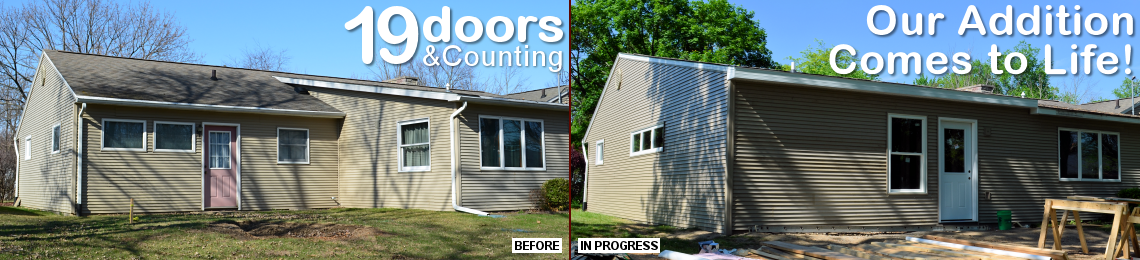
The last two days have been all about painting, and not without minor drama.
In Lynda’s quilt studio, the walls were covered with dark knotty pine paneling. We wanted to paint it white. The paneling was finished with a shiny varnish or shellac that would not take paint very well. So the painters spent hours sanding the paneling, trying to get down to bare wood. Nevertheless, when they applied a white latex-based primer on Thursday, the dark color of the paneling bled through in spots, giving the walls a decidedly blotchy appearance.
The solution (there is always a solution) was to spray an oil-based primer over the latex. Because we are continuing to live in the house during this project, our builder has avoided using highly volatile products such as oil-based paint. The smell is unpleasant, and the volatile organic compounds (VOCs) aren’t good for you.
In this case, we had little choice, so we were prepared to move out for a couple of days if necessary to avoid inhaling too many of those nasty VOCs. Surprisingly, it wasn’t that bad. The painters sprayed the oil-based primer early this morning, then opened all the windows. The bad smell was mostly gone in a couple of hours, so we are staying put.
With white primer applied throughout the addition, as well as the quilt studio and family room, our house is currently a study in white. We have white walls everywhere, ready for paint. Much of the final wall color will be a shade of white, so we’re really getting a sense of the final look. The place will be nice and bright, one of our goals.
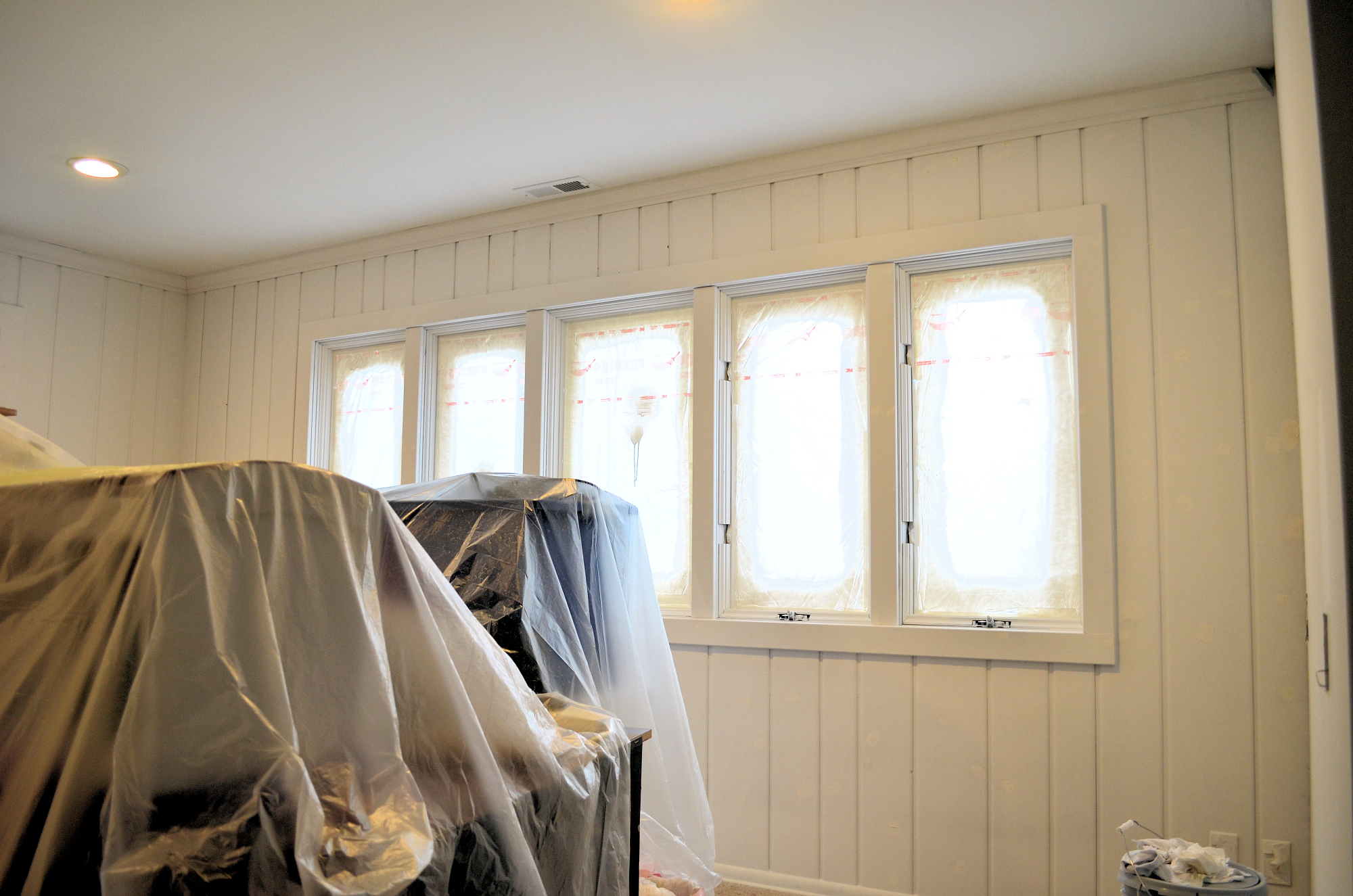
The quilt studio will get a white wall color over the white primer.
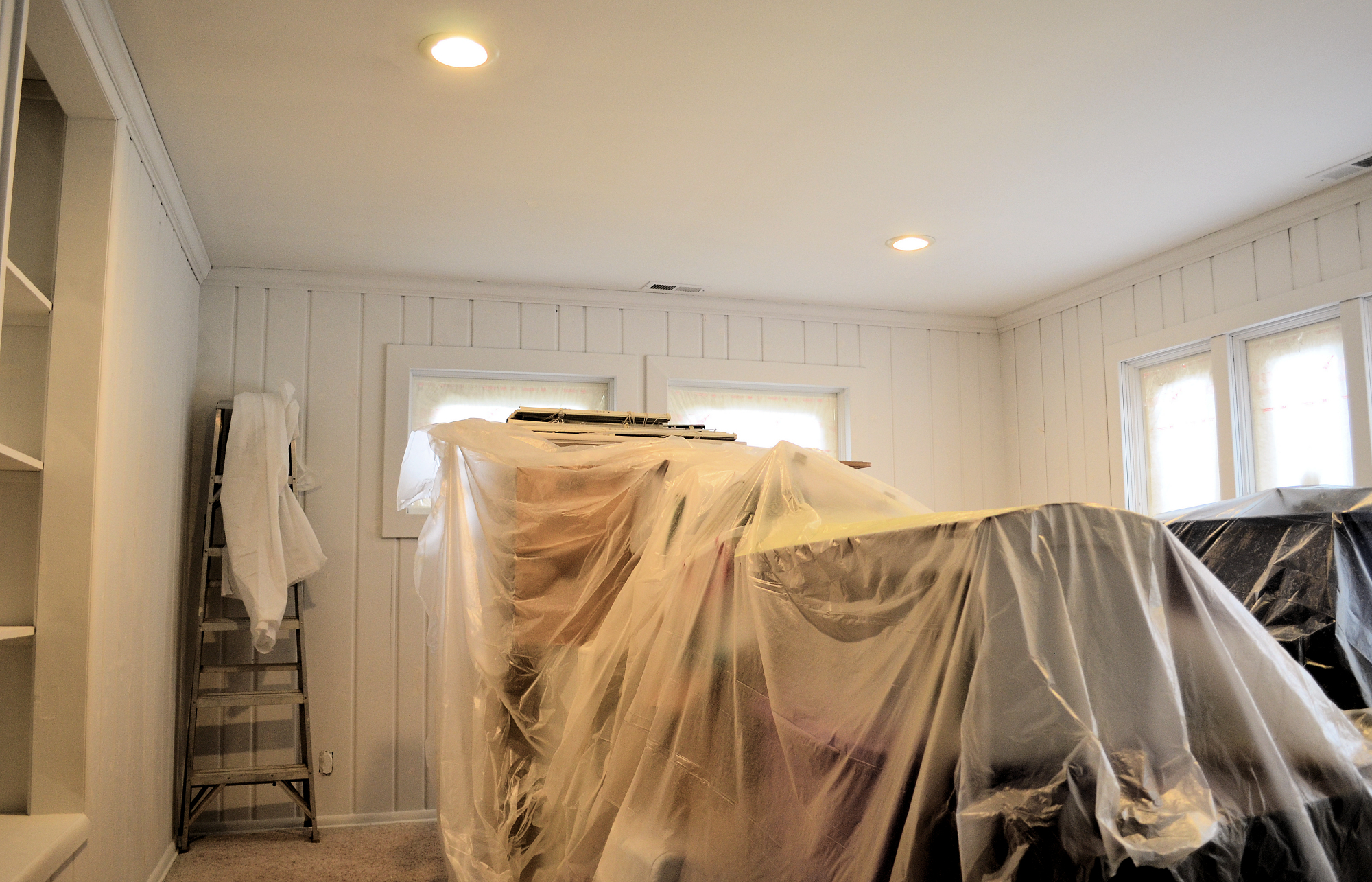
The dark pine paneling is now well-hidden.
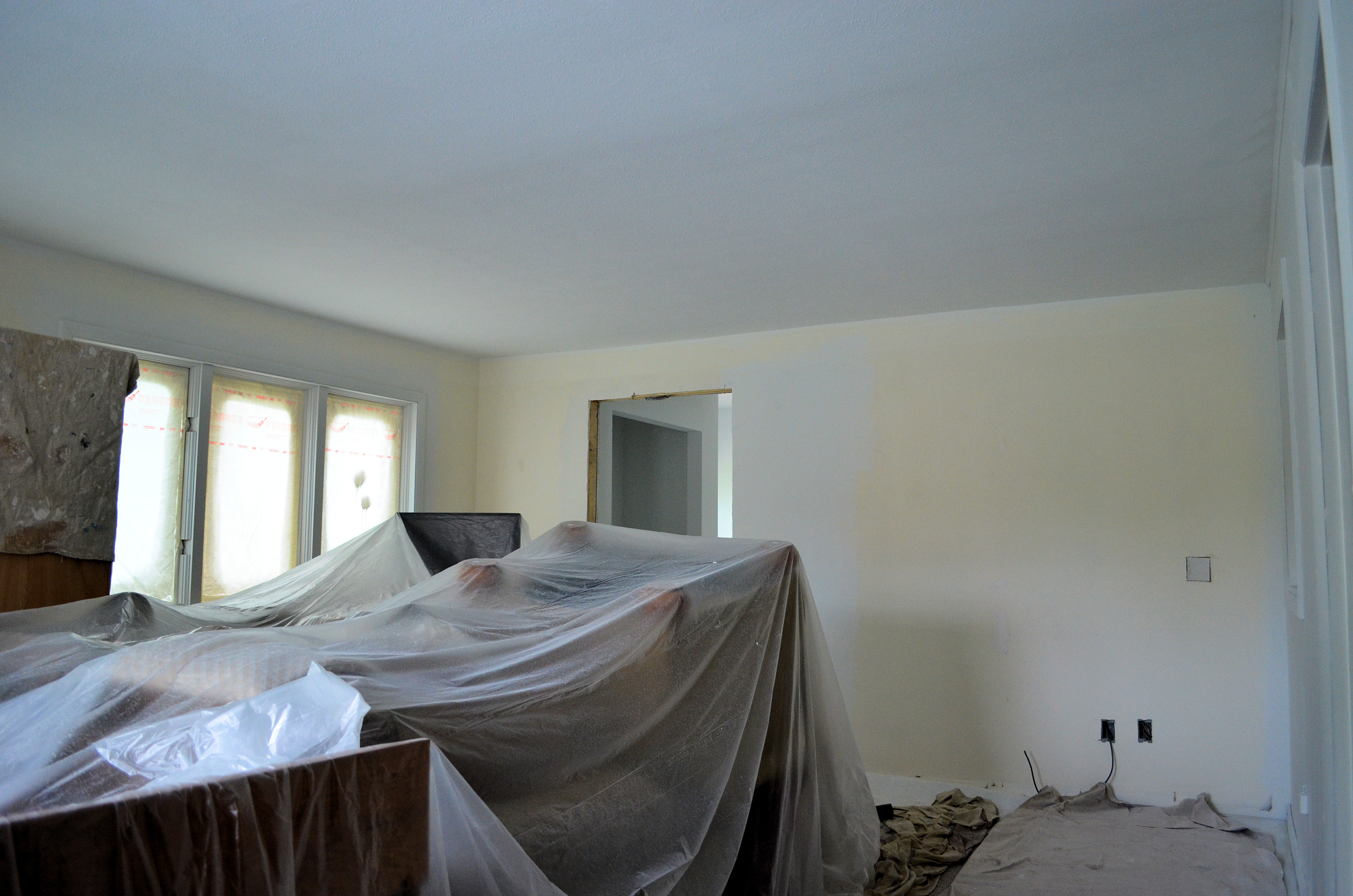
The family room walls will be painted tan/brown.
Today, we met with Matt from Wesson to finalize the configurations of the walk-in closet, the utility closet in the laundry room, and the linen closet in the bathroom. The latter two are relatively simple, so we spent most of our time on the walk-in closet.
On one side of the closet, we’ll have two levels of rods for hanging clothes. The upper rods will be pull-down closet rods from Rev-A-Shelf, ideal for those of us who aren’t very tall — or for someone in a wheelchair.
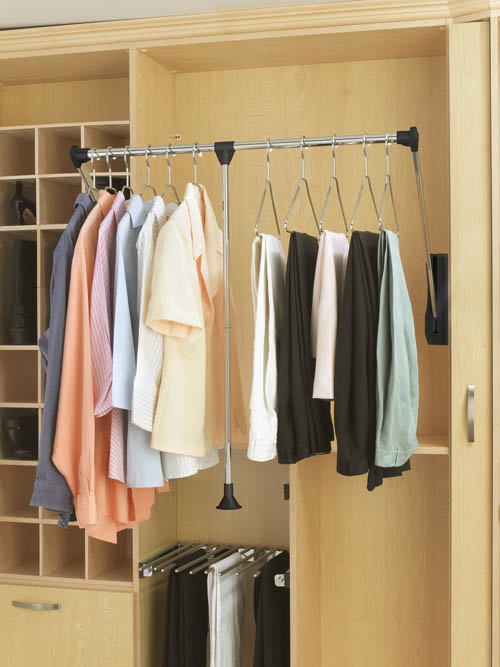
Rev-A-Shelf pull-down closet rod.
There will be a small area for long hanging clothes (dresses, suits) and then lots of shelves and cubbies for folded clothes such as sweaters and shirts. There is a special area set aside for pocketbook storage. It seems one of us really likes pocketbooks. In a pinch, the walk-in closet can serve as overflow fabric storage if the quilt studio exceeds its limits.
Like many older homes, ours was under-closeted, but that will soon be a problem of the past.